
Getting Stanton County Court Records
Start by naming the right court. Stanton County Court handles traffic, misdemeanors, small claims, probate, many juvenile matters, municipal-ordinance cases, and qualifying county civil cases. District Court keeps the general-jurisdiction records, including matters that arrive after a felony bind-over. Either way, the Nebraska JUSTICE One-Time Court Case Search covers both courts across the state. Treat its results as an index and case-detail layer only. The clerk still holds the local file. So for a copy, a certification, older material, or an image the portal will not show, that office is the practical source.
When you search by party name, follow the portal's requested last-name, first-name, middle-initial, and suffix style where it applies. Begin broad. Then narrow County to Stanton and pick the court type. Per the portal's public information, a one-time search costs $17. It returns up to 30 records and stays available for three calendar days. It may also lag new entries by about 24 hours. So a missing fresh result does not mean no Stanton County court record exists.
- Gather the case number if it is known. Otherwise note the party name, approximate year, court type, and the specific filing, order, or other court record needed.
- Use Nebraska JUSTICE for a statewide search or the Stanton County services page as a local path to the state case, date, and payment tools.
- For an ordinary or certified file copy, complete CC 3:29 and send it to the clerk holding the case. Mail is a documented request route; confirm payment and delivery details before sending it.
- Call the correct clerk or use the counter at the courthouse when a record is older, not scanned, unclear online, or when a page and seal estimate is needed. Article 8 and the public-view rule also support public electronic inspection at authorized courthouse terminals.
- For a sealed record, stop the ordinary request. The court's restricted process uses DC 1:12 and requires information beyond an ordinary public search.
Note: The Stanton clerk offers no dedicated online copy-request form or guaranteed turnaround, so ask the office directly about availability, page count, total cost, and timing.
Stanton County Court Record Clerks
Record custody in Stanton splits by court. Wanda Heermann, Clerk of District Court, keeps the District Court docket and file. Katherine Armbruster, Clerk Magistrate, keeps the County Court and Traffic Court docket and files instead. Both offices share 804 Ivy Street. Their post-office boxes and phone lines differ. Say which court you need. That simple step helps the clerk pull the right Stanton County court record.
District Court
Wanda Heermann, Clerk of District Court
804 Ivy Street, PO Box 347
Stanton, NE 68779
402-439-2222
County Court and Traffic Court
Katherine Armbruster, Clerk Magistrate
804 Ivy Street, PO Box 536
Stanton, NE 68779
402-439-2221
The hours differ depending on where you look. The state court page posts weekday County Court hours of 8:00 AM to 4:30 PM, while the county page lists 8:30 AM to noon and 1:00 to 4:30 PM. Call ahead before any records visit. A fax number or email address is just a contact route, not proof that the office accepts faxed requests, filings, or certified-copy orders.
Court Record Types
One search result never tells the whole story of a Stanton County court record. Nebraska's District Court records rule splits the file into distinct parts. The Register of Actions is one piece. So are the trial docket, judge notes, and financial record. General and judgment indexes and the case file round out the list. What you can see depends on the court. The file's age, digitization, and any restriction that applies matter too. County Court records work much the same way for their assigned case types. The docket history and filed documents may both exist.
- Register of Actions: the chronological record of court activity, often called the ROA.
- Case summary: court, county, case ID, caption, classification, filed date, status, and disposition fields when public.
- Filed documents: pleadings, motions, orders, judgments, and other case-file material that is public and available.
- Index and financial records: general or judgment indexes and case-associated costs or payment information where publicly displayed.
- Special records: a transcript or retained digital audio, which are requested separately from the ROA or a document copy.
A link to an image in JUSTICE does not mean every paper in the case has been scanned. Some items stay sealed. Others simply never made it online. A Stanton County clerk may still hold the record on paper or microfilm even when the public detail screen shows no image at all.
Stanton County Court Copy Requests
CC 3:29 is the state file-copy request form. It asks for the court and county. It also wants the case number, the case name, and the document you want with its date. You also mark whether you need a regular or certified copy, give a delivery destination, and add your contact details and signature. Name the document and date when you can. That small step helps a Stanton clerk. The clerk can check whether the item is public, scanned, and at hand before counting pages or seals. Filing the form starts the request. It does not promise a record by any set date.
For separate hearing media, the official County Court transcript and digital-recording guidance lays out the request context. It also stresses the same point from the other side. Give the clerk enough case and hearing detail to identify the material you are after.
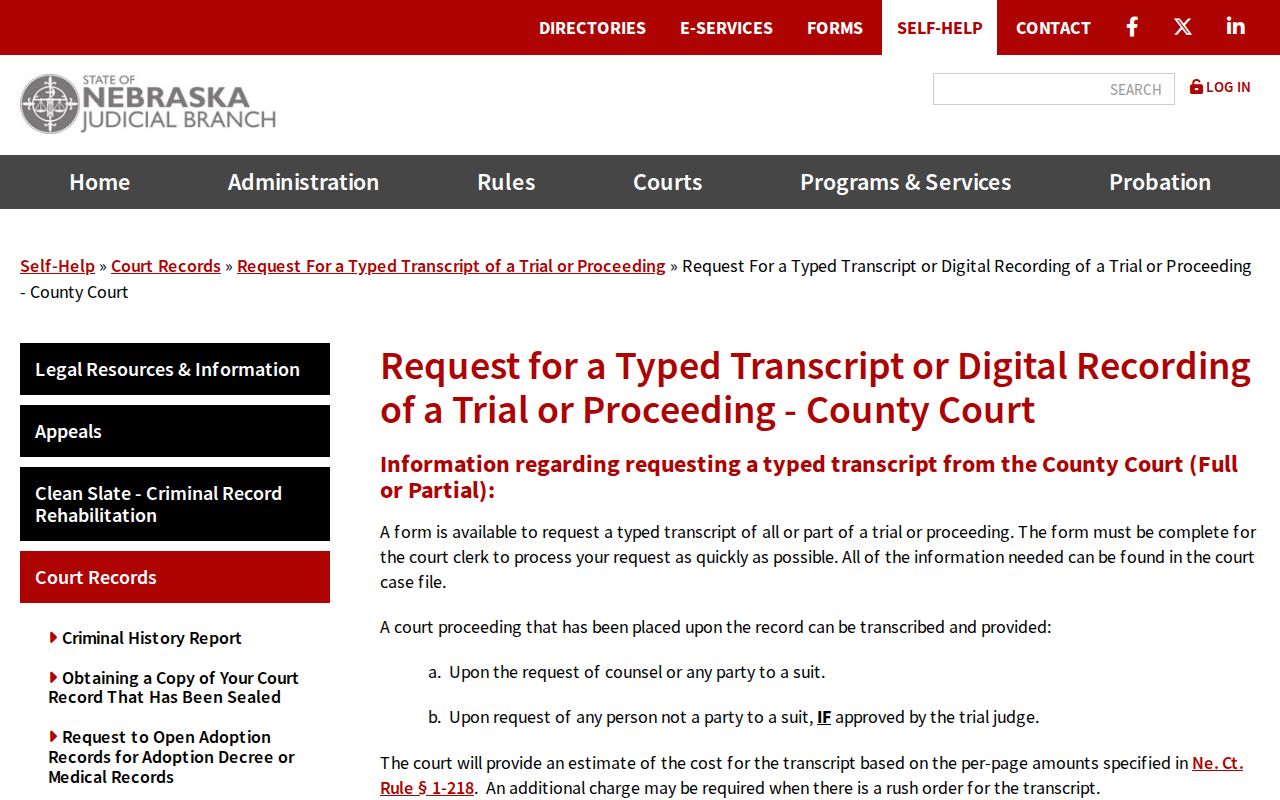
A form request earns its keep when a portal docket search finds the case but not the papers behind it. The underlying order, filing, or retained media may not appear on screen. Before you mail any payment, ask the clerk whether prepayment, a deposit, or a delivery arrangement is required.
Inside a Stanton County Court Record
Dig into a Stanton County court record and you'll meet the JUSTICE detail model. It splits summary facts from the chronological ROA and from the actual documents. Parties, attorneys, judgments, and cost areas sit in the summary layer. So do payment activity and judge notes. Links to document images appear there when they exist.
Be careful, though. A caption on a result row is not a final outcome. A judgment date and a satisfaction date answer two different questions. A payment record is not necessarily a disposition. Check the court and the case number. Check the current status too, before you lean on a detail screen.
| Case summary | Court and county, case ID, caption, judge, classification or subtype, filed date, status, and disposition when public. |
|---|---|
| Register of Actions | Date, action, initiator, document number, service details, and image ID when an image is available. |
| Judgment area | Type, date, amount, interest, satisfaction, and party roles when displayed. Entry of judgment is distinct from satisfaction. |
| Costs and payments | Charges, receipts, payment type, date, and amount may appear, subject to access limits. |
| Document images | Public linked images may exist for some uploaded or converted filings. An absent image can mean not digitized, restricted, or unavailable online. |
Stanton County carries county code 53 in the official JUSTICE county reference. That code alone won't hand you a complete case number. Type, year, and sequence still have to be confirmed live, either through the portal or with the clerk.
Stanton County Court Record Media
A typed transcript, digital audio, document copy, and ROA are different products. The ROA is the chronological activity record. A regular document copy is a filing or order from the case file. For County Court, the transcript process uses an estimate under Rule 1-218 and the estimate is prepaid; party or attorney requests can differ from nonparty requests, especially in District Court. Do not call a portal printout or a recording a certified court record.
County Court digital audio is available only if it was created and retained, and restricted hearings are excluded. The published schedule lists $10 for the first hearing on one CD, $5 for each additional hearing on that CD, and $5 for each additional CD. Audio is not the official court record. Ask Armbruster's office about a County Court request and Heermann's office about a District Court file or transcript question.
Note: The research did not locate a Stanton-specific scan-backlog or retention schedule, so older-file availability must be confirmed with the clerk.
Fees and Certified Copies
A certified copy is a clerk-certified record, not a printout from the search portal. Nebraska's certified-record statute gives that official copy its evidentiary weight. Request it with CC 3:29. Ask which clerk holds the case. Verify the known form charges before payment. Pages, seals, mailing, and deposit requirements can change the total.
| Request item | Known charge | Request path |
|---|---|---|
| Emailed non-certified electronic copy | No charge listed | CC 3:29; confirm public availability and delivery. |
| Mailed non-certified copy | $0.25 per page | CC 3:29 and clerk confirmation. |
| Emailed certified copy | $1 per request | CC 3:29 certified-copy selection. |
| Mailed certified copy | $1 per seal plus $0.25 per page | CC 3:29; confirm pages, seals, and payment. |
The CC 3:30 invoice lays out page and seal fields, which helps explain a clerk-issued bill. It supplements the request; it does not replace CC 3:29. For the dollar figures, the county-court copy-fee statute backs the $0.25 per-page charge and the $1 certificate or seal.
Stanton County Transcript Records
Ordering a transcript does not convert audio or a docket entry into one. The County Court self-help material links a typed-transcript request to CC 1:14. It also expects an estimate obtained through the clerk. Rush work can raise the price. The court makes no local turnaround promise. So call before assuming a hearing will be transcribed by a set date. The same caution fits when a file exists only on paper. It also applies when a public image link is missing.
Need a public court date or a case identifier? The Nebraska Multi-Court Case Calendar lists current and future public settings. It is not a full historical hearing archive. And a calendar entry never replaces the record the clerk holds.
Sealed Records and Public Access
Article 8 allows public electronic access to indexes, summaries, ROAs, available images, calendars, and some judgments or orders. A rule, statute, or court order can still say otherwise. The public-view rule also backs inspection at a clerk-office or State Library terminal. None of that means every filing is online. And no public terminal will open a sealed, juvenile, protected, or restricted-hearing record.
To seek a sealed record, file DC 1:12 with the clerk of the court that holds it. The form asks for the case number. It also asks for the requester's and recipient's identity, the statutory basis, and the records wanted. Payer and delivery choices, valid identification, notarization, and a signature or contact information complete the list. The state's sealed-record guidance spells out why a restricted file demands this different request path rather than an ordinary copy request.
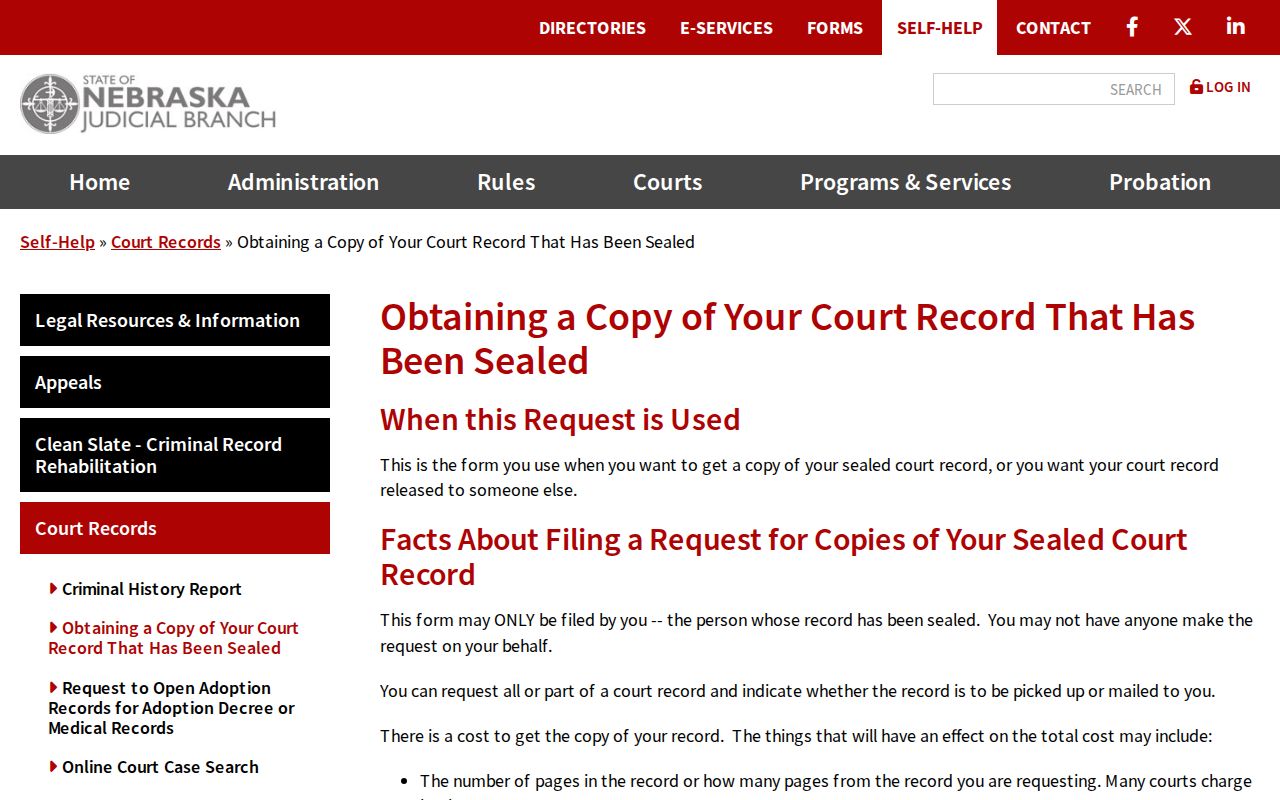
With Stanton County court records, a missing result or image may signal a restriction rather than an absence. Ask the proper clerk for the lawful route. Do not try to bypass the restriction.
Access rules that matter:
Article 8 identifies public electronic court information while preserving restrictions.
Nebraska's public-view rule allows inspection at designated terminals, subject to access limits.
The protected-information rule addresses redaction and document-specific sealing requests.
Nebraska's juvenile confidentiality statute limits access to juvenile record information, including docket material.
Stanton County Court File Requests
The Nebraska Public Records Act, spanning §§84-712 through 84-712.04, sets a general framework for examining and requesting public records. It fits best when the target is a county-government record held by the county office itself. A Stanton court file is different. Copy certification, sealed status, and court rules all apply. So the court clerk and the court-specific form are the more direct route.
Describe the record narrowly, and name the court. Distinguish a public case search from the document copy you want. A public-records request does not unlock sealed material. Nor does it override juvenile and protected-information limits. The statute sets its own request and response process. But do not invent a county deadline from it. For availability and cost, clerk confirmation is still the right next step.